Why a Secret Mountain Base Beats a Big Fort in Rust for Solo Survival
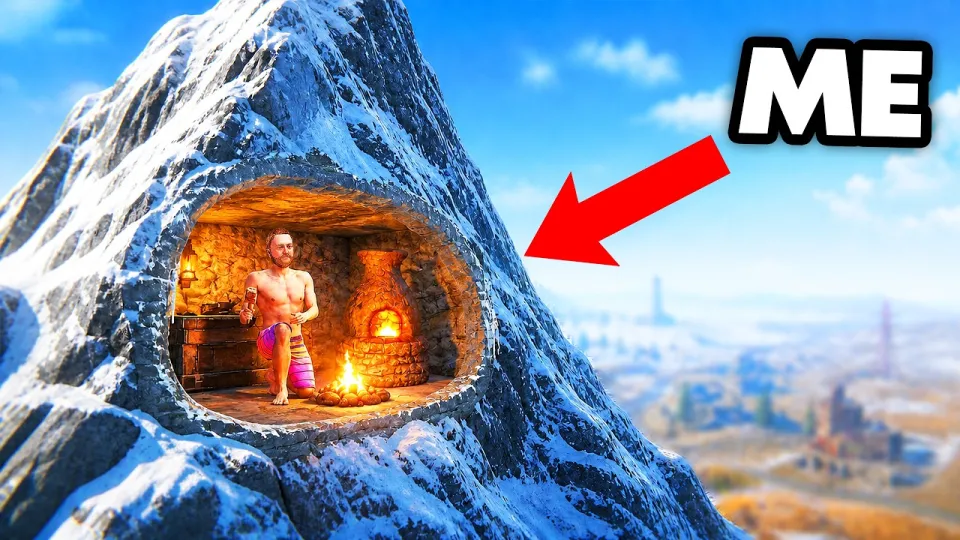
Video: I Lived in a Secret Mountain Base in Rust
You can order the same kind of articles for your own video to boost it on YouTube and Google. Just message the Telegram bot @sat_sit_bot. Articles with your video embedded are written and posted by the bot itself — on popular topical sites (no ads). Try it free: 50 articles on us.
· based on the channel Memeio
Key takeaways
- A hidden mountain base survives by never being found, not by tanking a raid — a big fort advertises loot and invites groups.
- Small footprint means low upkeep: a 1x2 or 2x2 tucked into terrain costs a fraction of stone and metal a clan base burns per day.
- Camouflage is cosmetic against players, not bots: sightlines, approach angles and loot value matter more than matching the rock texture.
- A secret base still needs a fallback stash, because a single discovered door ends the wipe for a solo.
- Memeio's mountain-base wipe on the Memeio channel shows the trade-off: near-zero raid pressure, but no room for a workbench upgrade path.
For a solo player in Rust, a secret mountain base is the better choice than a big fort because survival comes from not being found, while a large base only works if you can defend it around the clock. A tucked-away 1x2 or 2x2 costs almost nothing to upkeep, hides your loot from roamers, and turns every raid attempt into a search problem instead of a combat problem. The trade-off is real: you get no room for a full workbench tree and no second chance once someone finds your door. Memeio's wipe living in a hidden mountain base is a clean illustration of that balance, and you can follow the creator's updates via Memeio on X.
Why a hidden mountain base outperforms a big fort in Rust
The core argument is simple: in Rust, a base's defense is a function of how many people know where it is and how much it's worth raiding. A large compound on a popular road is a landmark — clans scout it, count doors, and decide whether the loot justifies the sulfur. A small base wedged into a mountain crevice, a rock overhang, or a spot where the terrain hides the footprint from the main approach path is invisible to anyone who isn't actively sweeping that exact grid. A solo player with 2,000 hours of building experience still loses a straight fight against a four-man group; a solo player who is never scouted doesn't have to fight at all. That is the whole logic of the strategy, and it's why so many veteran solo players treat base location as the single most important decision of a wipe.
What makes a mountain spot actually secret
Secret is not the same as remote. A base on the far edge of the map with no monuments nearby is rarely visited, but it's also useless for progress, and anyone flying a mini over the area will spot a structure instantly. The better spots share three traits:
- Terrain occlusion. The base sits below a ridge line, behind a rock formation, or inside a hollow that can't be seen from the nearest road or monument approach.
- Low traffic, not zero traffic. Grids just off a common travel route get checked occasionally, which is fine; grids nobody ever crosses look suspicious when a player does wander in.
- No visual signature. No wind turbine, no large furnace smoke column, no lit campfire at night, no turret poking above the rocks. Smoke and light are what actually give bases away.
A mountain base built into a slope also benefits from the fact that raiders have to approach on foot, often from a single direction, which makes a shotgun trap behind the only door far more effective than it would be in an open field.
Upkeep, footprint and the economics of a solo wipe
The economic case is what makes the mountain base sustainable. A modest 2x2 with honeycomb and a sheet-metal core costs a fraction of the stone, metal fragments and high-quality metal that a clan-sized base burns every 24 hours. That matters because upkeep is the silent killer of solo wipes: players build big, then spend the entire wipe farming for the privilege of holding a base they can't fill. A compact hidden base frees up time for monuments, scrap runs and PvP, which is where a solo actually gains progression. It also means losing the base isn't a wipe-ending event — you can rebuild the same shell in an hour with a stack of stone and a few hundred wood.
What a secret base cannot protect you from
Hiding solves scouting, not everything else. A hidden base still loses to:
- Cheaters and ESP users. If someone can see your boxes through terrain, camouflage is irrelevant, and this is the one variable no base design fixes.
- Getting followed home. The most common way a hidden base dies is that the owner leads a player to it after a fight, or logs off in a hurry near the door.
- Stale loot. A base nobody finds is also a base nobody trades with; if you never leave it, you never progress.
- A single point of failure. One door, one loot room, one code lock. A discovered solo base usually ends the wipe for its owner.
The practical fix is a fallback: a small stash box or a second micro-base in a different grid with a kit, tools and some scrap, so that losing the mountain spot costs you a night rather than a wipe.
Common questions about hidden bases in Rust
Viewers of hidden-base videos tend to raise the same doubts, and they're worth answering directly. The first is whether camouflage actually works — matching a base to the rock texture doesn't fool players, but breaking up the silhouette does, so prioritize shape and sightlines over color. The second is whether a tiny base can support progression: it can hold a tier 1 and tier 2 workbench and a repair bench if you plan the layout, but tier 3 usually means a second location or a trip to a monument. The third is the eco-raiding angle: cheap raids on small bases are common, so a wooden door with a stone frame and a trap behind it is worth more than an extra layer of honeycomb. The fourth is timing — building at low-pop hours on the first day of a wipe reduces the chance that someone watches you place the foundation, which is the moment most hidden bases are compromised.
How to set up a mountain base step by step
- Scout the map for a mountain grid with a rock overhang or slope hollow that hides a 1x2 footprint from the nearest road.
- Build the foundation and core during low-pop hours, and place the tool cupboard so it's not visible from outside the shell.
- Skip anything with a signature: no large furnace, no wind turbine on the roof, no turret above the ridge line.
- Add a single trap behind the only entrance and keep the door closed even when you're home.
- Split your loot — keep the valuable stack in a stash a few grids away, not in the base's main box.
Memeio's approach in the mountain-base wipe follows the same shape: stay small, stay quiet, and treat the location as the defense.
Useful links
- Memeio on X — the creator's social feed with clips and updates.
- Epidemic Sound — the music library credited for the video's soundtrack.
The bottom line on secret bases in Rust
A secret mountain base is the better pick for solo players because it trades raw durability for invisibility, and invisibility is the only defense a solo can actually maintain. Big forts are for groups with numbers to hold walls and farm the upkeep; small hidden bases are for players who'd rather spend the wipe progressing than defending. The strategy has clear limits — cheaters, being followed, and a single door — so pair it with a fallback stash and a plan for a tier 3 workbench elsewhere. Memeio's mountain-base wipe is a useful case study of the trade-off in practice, and the Memeio channel is worth following for more solo-survival experiments. For clips and updates, check Memeio on X.
Questions & answers
Is a mountain base in Rust actually harder to find than a forest base?
It depends on sightlines more than biome. Mountains are open, so a base on a slope is visible from far away unless a ridge or rock formation blocks the view. A base tucked into a hollow or under an overhang on a mountain can be harder to spot than a forest base, but a bare 2x2 on an exposed peak is the easiest thing on the map to find.
Can a solo player keep a tier 3 workbench in a tiny hidden base?
Usually not comfortably. A tier 3 bench plus the components and storage around it needs space that a 1x2 or 2x2 can't spare without becoming obvious. Most solo players keep a tier 2 in the hidden base and either use a monument's bench or maintain a second, more expendable location for tier 3 crafting.
How do I stop players from following me to my secret base?
Never run straight home after a fight. Break line of sight, cross water or terrain that hides your path, and wait somewhere safe before heading back. Also avoid logging off near the door in view of a road, and don't leave lights or smoke running at night, since those are what actually reveal a base's position.
Does camouflage paint or skin matching help hide a base?
Barely. Texture matching doesn't fool players who are looking for structures, because the shape and the door are what stand out. What works is reducing the silhouette: build below ridge lines, avoid tall attachments, and keep the footprint small enough that terrain features cover it from the main approach.
Source: I Lived in a Secret Mountain Base in Rust · Markdown version